2026-09-23 · Dave Ellison
What Causes Sewer Backups During Newark Winter Freezes
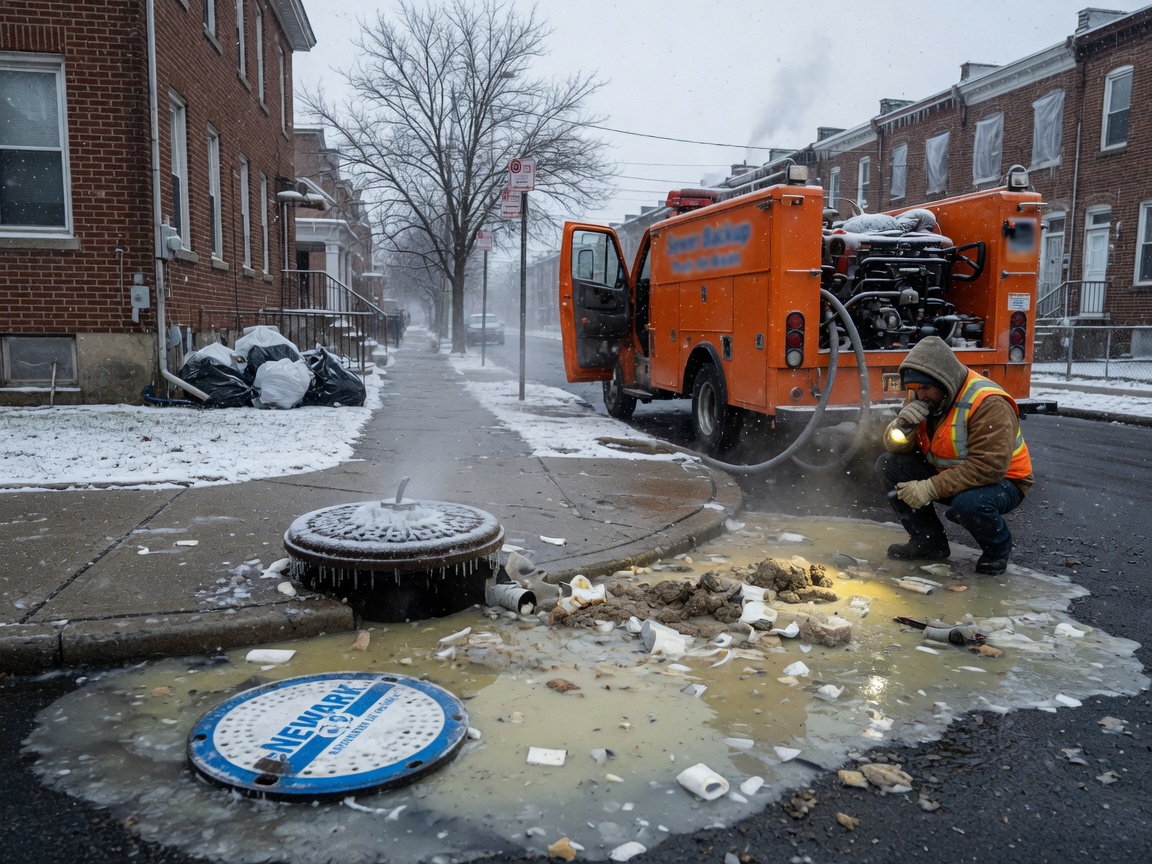
Freezing temperatures below 32°F cause water inside sewer lines to expand and crack pipes, especially in older homes across Downtown Newark and West Newark where lines installed decades ago lack modern insulation or slope.
Pipe Expansion from Repeated Freeze-Thaw Cycles
In New Castle County the humid subtropical climate delivers cold winters that alternate between freezes and thaws several times each season. Water trapped in low spots or partial clogs freezes first, pushing pipe walls outward until hairline fractures form. These cracks allow groundwater infiltration once temperatures rise, turning small leaks into full backups during the next cold snap. Homes near the University of Delaware often sit on clay-heavy soils that hold moisture longer, increasing the freeze pressure on cast-iron or clay lines still in service. Regular camera inspections catch early wall stress before a complete break occurs.
Soil Movement and Root Intrusion Near White Clay Creek
Ground around White Clay Creek State Park and the Newark Reservoir freezes to depths of several inches during sustained cold periods, shifting the soil that supports sewer laterals. Tree roots already seeking water in drier summer months expand their reach and then contract when the ground hardens, prying joints apart. Neighborhoods such as Hillside Heights and Oaklands see more of these failures because mature oaks and maples line older streets. Once a joint separates, sewage flow slows and any remaining liquid freezes solid, creating an ice plug that backs waste into basements. Addressing root growth before winter reduces the chance of ice-related separation.
Aging Lines in South Newark and Nearby Wilmington Areas
Many properties in South Newark and the corridors toward Hockessin still rely on 4-inch clay or cast-iron mains laid before 1970. These materials become brittle after decades of exposure to New Castle County’s freeze-thaw cycles. A single night below 20°F can finish a pipe already stressed by minor settling. When flow stops because of an ice blockage, pressure builds behind the plug and forces sewage through the weakest joint. Checking line condition with sewer camera inspection before the first hard freeze identifies brittle sections that need sewer line repair while access remains open.
How Clogs Become Backups Only in Winter
Grease, wipes, and minor root masses that pass unnoticed in warmer months solidify when temperatures drop. Flow velocity decreases as water thickens near the freezing point, allowing solids to settle and form dams. Once an ice layer caps the clog, the entire line pressurizes. Properties in Brookhaven and Chapel Hill with flatter yards experience slower drainage even in mild weather, so the winter effect appears faster. Clearing the line with main sewer line cleaning before December removes the material that would otherwise create an ice dam.
Homeowners who notice slow drains or gurgling toilets in late fall benefit from reviewing how to check for sewer line problems before they reach your Newark home. Early action prevents the larger cleanup that follows a freeze-induced backup. Typical repair costs and timelines appear in typical price ranges for sewer backup service in Newark DE.