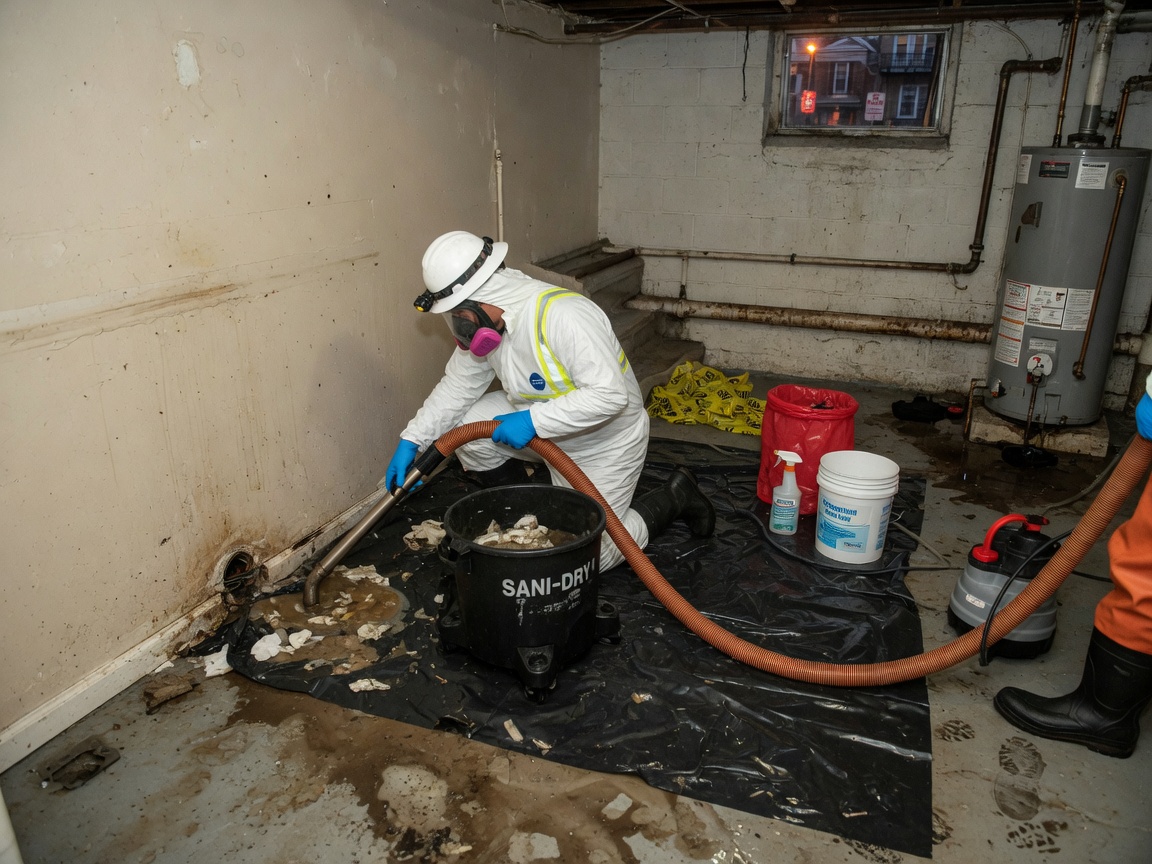
Sewage backups in Newark often stem from aging clay or cast-iron lines in South Newark and Hillside Heights homes built before 1970. Cold winters cause ground heave around White Clay Creek State Park and the Newark Reservoir, cracking pipes that then allow roots or silt to enter. Humid summers bring heavy downpours that overwhelm combined systems near Downtown Newark and the University of Delaware campus, pushing effluent into basements. Technicians must wear full PPE and use air movers plus HEPA filtration to prevent mold in the region's moisture-laden air.
Cleanup requires separating solid waste, extracting standing water with truck-mounted units, then applying EPA-registered disinfectants to concrete and wood framing common in West Newark ranchers. Edge cases include multi-unit student housing near Bob Carpenter Center where shared laterals create cross-contamination risks, and properties in Oaklands where high water tables keep soil saturated year-round. New Castle County code requires proper disposal at approved facilities; improper dumping can trigger fines. Homeowners should avoid bleach on porous surfaces because it drives bacteria deeper into subfloors.
After extraction, moisture meters check wall cavities and under slabs to confirm drying before new flooring or drywall installation. In Hockessin-adjacent neighborhoods with steeper terrain, backups can travel uphill through low-lying cleanouts, requiring camera location before any digging. Delaying cleanup allows hydrogen sulfide to etch fixtures and HVAC ducts, raising remediation costs in older Newark stock.
Technician insight
In Newark, the thing that catches most people out with Sewage Backup Cleanup is how cold winters shift the clay-heavy soil along White Clay Creek, cracking older lines that then back up again the next freeze. Homeowners in South Newark and Hillside Heights often try DIY enzyme treatments that mask the smell but leave bacteria in the slab, forcing a second visit once summer humidity returns.
Hillside Heights Basement Backup
A homeowner in Hillside Heights reported wastewater rising after a January freeze. Camera inspection showed a cracked clay lateral shifted by frozen ground near the Newark Reservoir. Crew extracted water, disinfected framing, and dried the slab over three days, preventing mold in the humid air. The line was later lined to stop recurrence during the next cold snap.
Sewage Backup Cleanup Services We Offer
✓Basement Sewage Extraction
Removes standing wastewater from Newark basements using truck-mounted pumps sized for older foundation drains common in South Newark and Hillside Heights.
✓Contaminated Surface Sanitization
Applies hospital-grade disinfectants to concrete floors and framing in properties near the University of Delaware where repeated backups have soaked subfloors.
✓Odor Removal and Air Scrubbing
Uses ozone and HEPA scrubbers to clear hydrogen sulfide odors that linger in humid New Castle County homes after winter freeze-related backups.
✓Carpet and Flooring Removal
Safely lifts and disposes of saturated carpet and laminate in West Newark and Oaklands homes where clay soil keeps moisture trapped under slabs.
✓Cross-Contamination Prevention
Isolates HVAC returns and shared laterals in multi-family buildings near Bob Carpenter Center to stop sewage migration to unaffected units.
Sewage Backup Cleanup Cost in Newark, DE
| Service | Typical Range | What Affects It |
|---|---|---|
| Initial Assessment And Camera Locate | $125–$275 | Higher in multi-story student housing near University of Delaware due to shared laterals |
| Sewage Extraction Per 100 Sq Ft | $350–$650 | Increases with clay-soil access issues in South Newark and Oaklands |
| Full Sanitization And Drying | $800–$1,600 | Depends on extent of wall and subfloor saturation after cold-weather pipe shifts |
| Odor Removal Add-On | $200–$400 | Required when backups affect HVAC in humid summer conditions |
Ranges are typical for Newark, DE and confirmed with an exact written quote before any work starts.
How it works
- 1
Site Assessment
Technician arrives in Newark, locates the backup source with camera inspection, and maps affected rooms while noting soil conditions around White Clay Creek.
- 2
Containment And Extraction
Sets up barriers, pumps out wastewater, and removes solids before they migrate through older gravity lines in Downtown Newark or Hillside Heights.
- 3
Disinfection And Drying
Treats surfaces, places drying equipment, and monitors humidity levels typical of New Castle County's humid subtropical climate.
- 4
Final Clearance
Performs moisture and ATP testing, then documents the restored condition for homeowners in West Newark and near the Newark Reservoir.
Pricing
Pricing varies by volume, access difficulty in older Newark homes, and whether structural drying is required after winter backups.